Get free access to the most comprehensive World Cup coverage in The Athletic app
The group stage is over, and the World Cup has finally been whittled down from 48 to 32 teams.
But there will be no whittling down this ranking of the 50 top players at the tournament, informed by The Athletic’s player ratings model, which provides an objective assessment of each player’s contribution in a match.
The list will stay at 50 names and players will not simply vanish as their teams are eliminated in the knockout rounds, though they may well be leapfrogged by others who get more time to show what they can do on the World Cup stage.
To compare to our rankings from week two, click here. You can also see how we ranked the players after the first round of matches here. And this is how we ranked them before the tournament started.
Please feel welcome to direct your thoughts and complaints to the comments section below…
1. Lionel Messi — Argentina/Inter Miami (position unchanged)
Has any footballer ever had a better World Cup group stage? Messi managed to strike the perfect balance against Jordan, resting from the start but still coming off the bench to give the fans in Dallas an indelible memory with his sixth goal of the tournament from a free kick.
2. Kylian Mbappe — France/Real Madrid (position unchanged)
Mbappe could not continue his scoring streak against Norway’s second string, but he exhibited a level of unselfishness in assisting Ousmane Dembele twice that should make France clear favourites to win this World Cup. He looks completely in sync with the world-class talent behind and around him.
3. Vinicius Jr — Brazil/Real Madrid (+2)
Vini Jr continues his rise up this list after producing his third decisive performance in a row against Scotland, gleefully exploiting some terrible defending to take his World Cup tally to four goals. He will need to stay in this groove if a flawed Brazil side are to make a deep run.

Vinicius Junior (Chandan Khanna/Getty Images)
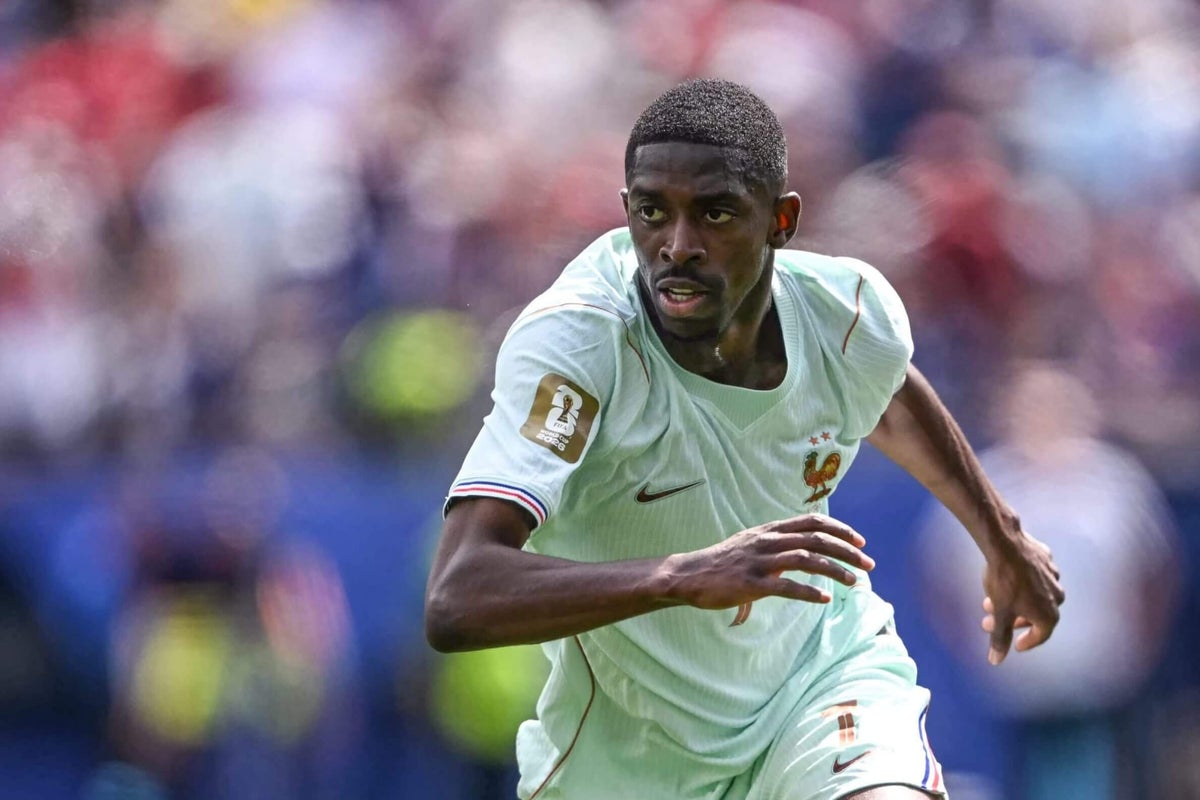
4. Ousmane Dembele — France/Paris Saint-Germain (+7)
Is this too much credit for tearing apart a depleted Norway? Perhaps, but a World Cup hat-trick is a World Cup hat-trick, and the quality of his finishing was top tier. After a slow start, he has found his place in this France attack, and that is a terrifying development for everyone else.
5. Michael Olise — France/Bayern Munich (-1)
He has receded into the background of Mbappe and Dembele’s brilliance in the last two matches, but Olise still oozes class and threat every time the ball is at his feet. France having three of the top-five players in this ranking also feels entirely appropriate.
6. Harry Kane — England/Bayern Munich (position unchanged)
Kane is having a funny World Cup. His three goals in three group games is perfectly respectable and England’s attack is clearly built around him in a way that makes theoretical sense, but something still feels like it isn’t quite clicking. He, and his team, have another gear to find.
7. Achraf Hakimi — Morocco/Paris Saint-Germain (+2)
Hakimi produced his best attacking performance yet against a lively Haiti to secure Morocco’s passage into the round of 32, bundling his team’s first goal in from close range and almost scoring twice more either side of cutting the ball back perfectly for Ismael Saibari to sweep in.
8. Erling Haaland — Norway/Manchester City (-5)
True Vikings don’t run from a battle, Erling. Norway’s decision to effectively wave the white flag against France by resting their big names has cost Haaland here, and ramped up the pressure for a big performance against Ivory Coast in the round of 32.
9. Pedri — Spain/Barcelona (+1)
Maintained his status as the most impressive midfielder at this tournament against Uruguay, who lost Manuel Ugarte to a serious injury in their unsuccessful efforts to pressure the Barcelona playmaker into giving the ball away. His influence on Spain’s play goes beyond goals and assists.
10. Ismael Saibari — Morocco/PSV Eindhoven (+16)
Saibari has earned his place in the top 10 after a brilliant group stage that saw him score against all three of Morocco’s opponents. He clinically converted Hakimi’s cutback against Haiti and was unlucky not to find the net again as he stretched to connect with a cross at the back post.

Ismael Saibari (Timothy A Clary/Getty Images)
11. Luis Diaz — Colombia/Bayern Munich (-5)
Endured perhaps his quietest game of this World Cup in Colombia’s stalemate against Portugal, but his relentless activity and direct running always stress opposing defences. The burden will rest upon him to bring his quality to bear against a stubborn Ghana in the round of 32.
12. Jude Bellingham — England/Real Madrid (+18)
Bellingham rebounded strongly from an anonymous display against Ghana by producing two more decisive moments for England against Panama, sticking out a toe to poke in Bukayo Saka’s corner before clipping an inviting cross in from the left for Kane to head into the net.
13. Yan Diomande — Ivory Coast/RB Leipzig (+3)
Diomande’s group stage was not prolific in terms of final-third production but it did underline his star potential. Much of the attacking value Ivory Coast generate is contingent on the attention he is consistently able to attract from multiple defenders, creating space for others.
14. Dayot Upamecano — France/Bayern Munich (position unchanged)
Caught out by Thelo Aasgaard for Norway’s consolation goal, Upamecano was otherwise solid at the heart of France’s defence in the absence of his regular partner William Saliba. It would have been fun to see him go up against Haaland, but those bigger tests are coming.
15. Lamine Yamal — Spain/Barcelona (+3)
Yamal rises in part due to other fallers in this range. He was nowhere near his best against Uruguay as he works his way back to peak condition, but the teenage prodigy still managed to create several very dangerous situations with his dribbling and direct running.
16. Bruno Fernandes — Portugal/Manchester United (-8)
After taking full advantage of the space he was afforded by the Uzbekistan defence Fernandes was largely smothered by Colombia, though he did force one good save from Camilo Vargas. It is also fair to say that Ronaldo does not give him much to work with.

Bruno Fernandes (Pablo Morano/Getty Images)
17. Joshua Kimmich — Germany/Bayern Munich (-5)
Kimmich’s on-ball quality is beyond dispute, but questions about his viability as a right-back will persist after Germany were picked apart by Ecuador. Is there no one else in Julian Nagelsmann’s squad who can slot in and allow him to shift back into midfield?
18. Folarin Balogun — United States/Monaco (-5)
Balogun inevitably slips a little here after resting in USMNT’s 3-2 defeat against Turkey and losing ground in a star-laden golden boot chase. He is having an excellent World Cup, and has an inviting chance to make up for lost time against Bosnia-Herzegovina in the round of 32.
19. Enzo Fernandez — Argentina/Chelsea (-4)
Another player rested for the third round of group matches, Fernandez should be fresh for his next opportunity to impress Real Madrid when Argentina take on Cape Verde. All the evidence suggests he will take it — he looks very confident and comfortable in this team.
20. Vitinha — Portugal/Paris Saint-Germain (+9)
Obscured by the stodgy stalemate is the fact that Vitinha produced his best display of this World Cup against Colombia, looking much more like the patient, probing deep playmaker PSG fans are used to watching. Has he found his rhythm just in time for the games that matter?
21. William Saliba — France/Arsenal (-4)
It is always hard to calibrate the ranking of players who rest at this stage of a World Cup, but Saliba was impressive in France’s victories over Senegal and Iraq and, alongside Upamecano, should provide the secure foundation for their outrageous attack to make the difference.
22. Aymeric Laporte — Spain/Athletic Club (new entry)
Perhaps did not get enough credit for his displays against Cape Verde and Saudi Arabia, but Laporte’s composure on the ball and diligence without it were on full display against Uruguay. Spain are yet to concede a goal at this World Cup, and he is the biggest reason why.
23. Declan Rice — England/Arsenal (-4)
Rice’s value to England’s midfield was underlined in his absence by the ease with which Panama played through Thomas Tuchel’s team for long stretches. The defensive security he provides alongside Elliott Anderson is invaluable, and his consistently dangerous set-piece deliveries are a huge weapon.

Declan Rice (Tom Weller/Getty Images)
24. Matheus Cunha — Brazil/Manchester United (+8)
Cunha seems to have cemented his position as Brazil’s starting No9 over the course of this group stage, developing a dangerous chemistry with Vini Jr and netting his third goal of the World Cup with a simple finish against Scotland. He is a fluid, stylish focal point.
25. Florian Wirtz — Germany/Liverpool (+10)
Germany did not do much right against Ecuador but Wirtz was once again at the heart of most of their good attacking play, including the sharp pass which gave Leroy Sane the chance to open the scoring. It was his third assist of the tournament, and his vision makes Nagelsmann’s system tick.
26. Virgil van Dijk — Netherlands/Liverpool (+14)
There isn’t a centre-back in this tournament as accomplished in the opposition box as Van Dijk, who followed up his goal against Japan with a clever nod across goal for Brian Brobbey to lash in against Tunisia. Netherlands’ defence continues to look vulnerable around him, but it would look worse without him.
27. Rodri — Spain/Manchester City (re-entry)
He remains some way short of his Ballon d’Or-winning best, but Rodri has been good at this World Cup, shielding a so far impenetrable defence and stabilising Spain in possession. Austria’s high-octane press should give him a good test in the round of 32.
28. Ismaila Sarr — Senegal/Crystal Palace (new entry)
Sarr became Senegal’s all-time top scorer at the World Cup with his close-range strike in the 5-0 rout of Iraq, and also looks his country’s most reliable source of goals heading into the knockout rounds. His speed makes him a huge threat running in behind, but he can also shake himself free in the box.

Ismaila Sarr (Michael Reaves/Getty Images)
29. Elliott Anderson — England/Nottingham Forest (new entry)
Anderson has had plenty on his plate in recent days with a £116million transfer to Manchester City in the works and had even more to deal with as the lone holding midfielder against Panama. He did as well as could be expected and has been very good alongside Rice.
30. Diogo Costa — Portugal/Porto (new entry)
Costa deserves to leapfrog Thibaut Courtois as the highest-ranked goalkeeper on this list after a very impressive performance against Colombia. He made several excellent saves, one vital sliding intervention to clear a cross and generally commanded his area superbly.
31. Cody Gakpo — Netherlands/Liverpool (-7)
Personal tragedy has rendered Gakpo’s attempts to ignite Netherlands’ attack trivial by comparison, and it would be entirely understandable if he played no further part at this World Cup. His group stage contribution to Ronald Koeman’s team was impressive and substantial.
32. Pau Cubarsi — Spain/Barcelona (new entry)
Has forged a nice partnership with Laporte at the heart of a confident Spain defence and even tempted Uruguay attacker Agustin Canobbio into a rash challenge that earned him a straight red card. Cubarsi passes the ball well, reads danger promptly and carries himself like a veteran.

Pau Cubarsi (David Ramos/Getty Images)
33. Brahim Diaz — Morocco/Real Madrid (-8)
Diaz falls in this list after being relatively peripheral to Morocco’s win over Haiti, having provided brilliant assists for Saibari against Brazil and Scotland. His vision and passing range from the right flank are a nice complement to Hakimi’s athletic overlapping bursts, and will be very much needed against Netherlands.
34. Nuno Mendes — Portugal/Paris Saint-Germain (-14)
Mendes continues his yo-yo journey in these rankings after struggling to make any real impact against Colombia. Portugal have yet to find their best groove, but a key part of that involves his lightning thrusts up the left flank. Croatia will certainly be worried about his attacking threat.
35. Bruno Guimaraes — Brazil/Newcastle (new entry)
Huge questions remain around Brazil’s midfield — namely, whether it can resist being overrun by better opposition. But there is no doubt that Guimaraes has the quality to supply their talented forwards, and he took his World Cup assist tally to three by setting up easy chances for Vini Jr and Cunha against Scotland.
36. Leandro Trossard — Belgium/Arsenal (new entry)
Belgium sorely miss the X-factor of Eden Hazard but Trossard is a very reliable contributor, and underlined his value with two nice goals in a comfortable win over New Zealand. This faded golden generation will likely need more of the same from him to have any chance against Senegal.
37. Bukayo Saka — England/Arsenal (position unchanged)
Handed his first start of the World Cup against Panama, Saka didn’t really maximise the opportunity from open play. It is tempting to wonder if he is still managing an injury, but his set-pieces are always dangerous, and created England’s opener for Bellingham.
38. Roberto Alvarado — Mexico/Guadalajara (new entry)
Alvarado has been the class of Mexico’s midfield in the group stage, whipping in a pinpoint cross from the right flank for Raul Jimenez to head in against South Africa and laying the ball off for Alvaro Fidalgo to curl their third into an empty net against Czech Republic.

Roberto Alvarado (Hector Vivas/Getty Images)
39. Julian Quinones — Mexico/Al Qadsiah (new entry)
Colombia-born Quinones has provided the cutting edge from the left side when Mexico needed it in Group A, firing in the opening goal of the World Cup against South Africa and pouncing on a loose ball in the six-yard box to make sure of their victory over Czech Republic.
40. Ruben Dias — Portugal/Manchester City (new entry)
Dias came into this World Cup hoping to play his way back into form after a lengthy injury absence and by the looks of things he has succeeded. His performance against Colombia was calm, authoritative and vital, and the stakes for Portugal will only get higher from here.
41. Felix Nmecha — Germany/Borussia Dortmund (-20)
Nmecha’s excellent start to this World Cup took a significant hit against Ecuador, who repeatedly found space to receive and run between the German lines. That was not all his fault, of course, but he will be eager to reassert his high standards against Paraguay.
42. Kevin De Bruyne — Belgium/Napoli (new entry)
There are still few sights in football more beautiful than De Bruyne shooting, and the technique for his left-footed effort which found the bottom corner against New Zealand was typically pristine. He also played a key role in creating one of Trossard’s goals. Can he keep it up at 35?
43. Jonathan David — Canada/Juventus (-10)
David falls after following up his historic hat-trick against Qatar with a far more forgettable display in defeat to Switzerland. Canada urgently need their most accomplished attacker to return to his clinical best in the round of 32 against South Africa.
44. Joao Neves — Portugal/Paris Saint-Germain (-21)
Neves scored in Portugal’s first group match, was good if unspectacular in their second and did not even start their third. Champions League watchers are very familiar with his quality but if his place in Roberto Martinez’s starting XI is not assured, he will not stay in this list for much longer.

Joao Neves (Jose Breton/Getty Images)
45. Thibaut Courtois — Belgium/Real Madrid (-7)
Courtois has only been OK by his sky high standards at this World Cup and he was at fault for New Zealand’s goal, punching the ball tamely towards Elijah Just. Only his very best will do when Belgium assume underdog status against a more impressive Senegal side.
46. Brian Brobbey — Netherlands/Sunderland (+3)
Brobbey’s bustling rise to prominence at the point of Netherlands’ attack has been one of the World Cup’s better stories, and he took his goal tally to three with an emphatic finish from Van Dijk’s knockdown against Tunisia. Few opponents are physically equipped to deal with him.
47. Breel Embolo — Switzerland/Rennes (new entry)
Speaking of bustling attacking presences, Embolo has been excellent for Switzerland so far and would have more than two assists to go with his one goal were it not for the profligacy of some of his team-mates. His hold-up and link-up play were the driving force behind beating Canada.
48. Deniz Undav — Germany/Stuttgart (-21)
What happens when an impact substitute doesn’t make an impact? They fall heavily in any player ranking list, that’s what happens. Undav set the bar almost impossibly high with his match-winning turn against Ivory Coast and did not get the same quality of service off the bench against Ecuador.
49. Crysencio Summerville — Netherlands/West Ham (-27)
A similar story here. Summerville remains pretty peripheral to Koeman’s plans despite scoring two outstanding goals at this World Cup and as long as he remains so, it is very hard to see him rising to the upper echelons of this list in the knockout rounds.
50. Alexander Isak — Sweden/Liverpool (-19)
Isak was ineffective against Japan, ending an impressive personal group stage with something of a whimper. He now has the unenviable task of trying to bloody the noses of Upamecano and Saliba when Sweden take on France in the round of 32. Good luck, Alexander.
