Welcome to my pick-by-pick breakdown of the entire first round of the 2026 NHL Draft.
Over the next two days, I’ll review and rank the draft classes of all 32 NHL teams. Today’s Round 1 analysis will be followed on Day 2 by a look at almost all of the 223 selections made across seven rounds, analyzing the complete hauls of each club.
After another season of travel, video, phone calls and texts, it’s my educated view of each team’s selections, carefully considering both my own evaluations of the prospects and each player’s consensus expected draft range. The goal is for this to be the most comprehensive draft review available anywhere.
Note that this isn’t a look at the total value each club got out of its picks, but rather an examination of each team’s class relative to the location of its selections. Teams with more picks (or higher picks on average) are not guaranteed good grades, just as teams with few picks (or lower picks on average) are not guaranteed bad ones.
As always, my analysis of each team’s class is sorted into the following categories:
- Winners: Teams I believe will outperform where they selected.
- Overtime winners: Teams I believe will perform in line with or just above where they selected.
- Overtime losers: Teams I believe will perform in line with or just below where they selected.
- Losers: Teams I believe will underperform where they selected.
Winners
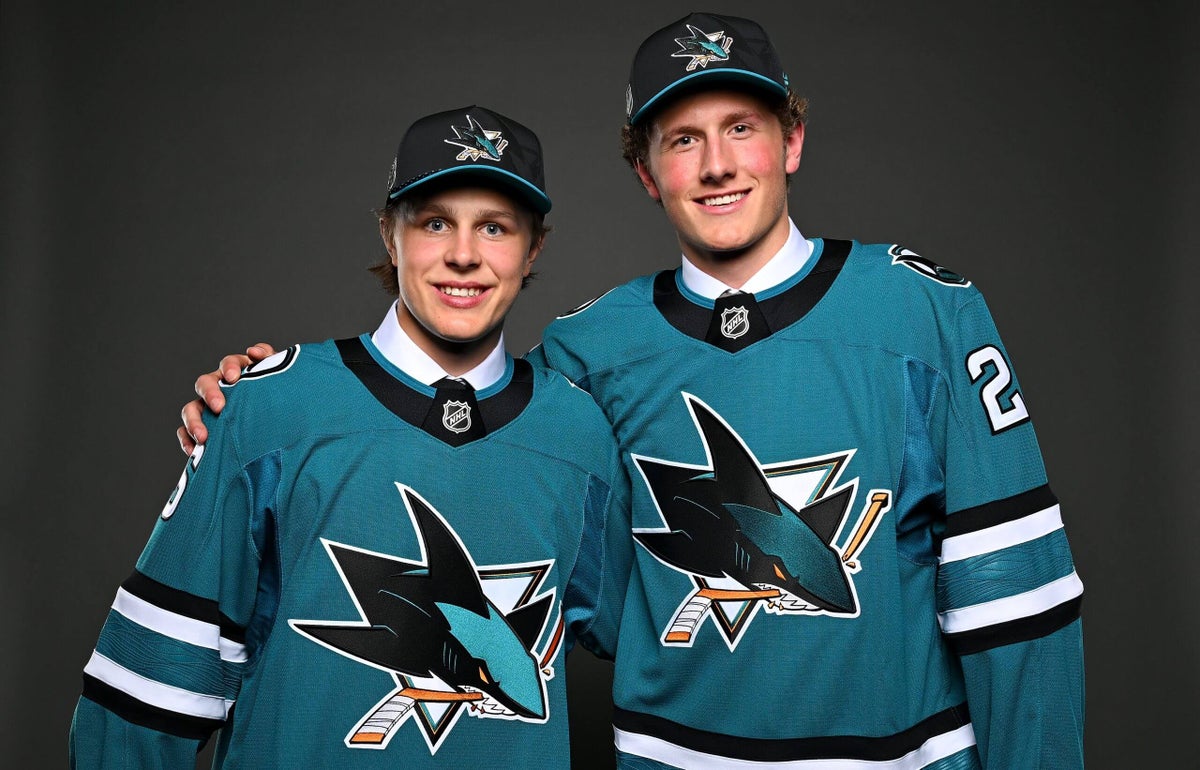
San Jose Sharks
No. 2: Ivar Stenberg
My ranking: 2
No. 9: Keaton Verhoeff
My ranking: 8
No. 21: Ryan Lin
My ranking: 10
I think the Sharks perfectly executed this draft cycle and are the biggest winners of Round 1. They need a premium D prospect more than another premium young forward as an organization, but I think they came to the right conclusion that Stenberg was the best player available at No. 2, and they still managed to get one of the top D in the draft at No. 9 in Keaton Verhoeff.
Their foursome up front of Macklin Celebrini, Michael Misa, Will Smith and Stenberg should give them a formidable power play and two pairs in their top-six that scare opposing teams, and the emergence of Igor Chernyshov gives them another like-aged forward to round out that group. Now they also have two top young D in Sam Dickinson and Verhoeff as well.
Stenberg is one of the most accomplished teenage forwards to come out of Sweden in decades and should be a front-line winger who can either drive his own line away from Celebrini or slot in as a formidable running mate. He’s going to make an immediate impact as a rookie in the league next year as well, and I think he can put himself in the Calder mix.
I’ve been a little lower on Verhoeff over the last two years than most, but the consensus started to line up more with me toward the end of his freshman year at North Dakota. Still, despite some of the yellow flags his boots and decision-making raise for me, he’s still a pro-built right-shot summer birthday who already has pedigree in the NCAA, WHL and internationally with Hockey Canada. His size, handedness, shot, strong overall tools and development runway should make him a stud defenseman in the league and still landed him high on my board, even if I slotted him below fellow D Chase Reid, Alberts Šmits and Carson Carels.
If you’ve followed my work on this draft class, it should come as no surprise to you that I’m high on the selection of Lin, my favorite prospect in it. I think he’s one of the smartest, most polished, and most competitive D in this class. I think he’s a better skater and athlete than people gave him credit for, and I think he’s going to be an impactful top-four intellectually puck-moving D in the NHL.
The Sharks’ young core should be the envy of the league.
Seattle Kraken
No. 7: Chase Reid
My ranking: 3
After using their first five first-round picks as an organization on forwards, the Kraken finally used their sixth on a defenseman. This was the draft to do it, too, with a couple of the big five D promised to still be available at No. 7. Reid fills a clear hole within Seattle’s pool and immediately becomes the best young defenseman the organization has had since its inception back in 2021.
Reid was my top-ranked D in the class. He’s a proactive offensive defenseman who joins the rush and activates off the line early and often, and then has the skating and skill to make plays off his offensive instinct. Despite being on the older side of the class, he has also progressed steeply over the last year and a half, particularly defensively. He has the attributes of a top-pairing offensive D and future power-play quarterback.
Toronto Maple Leafs
No. 1: Gavin McKenna
My ranking: 1
How can you not consider this a win for the Maple Leafs? McKenna immediately brings renewed life to Toronto and will slot into the top six and top power-play unit on Day 1. He’s going to have some ups and downs as a rookie and will need to get stronger and become a more consistent and reliable off-puck player, but on the puck, he’s going to inject a rare and exciting skill set as a brilliant perimeter handler and playmaker who stars like Auston Matthews and William Nylander will quickly be fighting to play with. Toronto got the most talented and dynamic player in the class, and one of the most talented and dynamic players to come through the draft in recent years.
Winnipeg Jets
No. 8: Viggo Björck
My ranking: 6
Björck is one of my favorites in this class, and through his play put to bed questions about whether he, at 5-foot-9, was one of the best forwards and top centers in this class. He is, and Jets fans are going to love watching him play. He’s smart, strong, competitive and skilled, with a unique understanding for his age of how to impact games. He’s going to defy the odds and become a top-six center who makes everyone around him better.
The Jets needed a center, and they got a good one that fans in Winnipeg are going to love watching play.
Nashville Predators
No. 10: Wyatt Cullen
My ranking: 12
No. 31: Tommy Bleyl
My ranking: 28
Cullen was one of the biggest risers in this draft despite missing much of the season due to hip problems because his skill level was a clear separator, even side-by-side with other top prospects in major events like the CHL USA Prospects Challenge and U18 worlds. He shot up to 6-foot-1 from 5-foot-5 in his time at the program and is one of the most dynamic one-on-one players in this class, with the skating and handling to break down coverage and make plays.
Though he finished at No. 28 on my list, Bleyl is the one player I said in my final thoughts column that I wish I’d ranked a little higher (in the early 20s). When you can skate and think the game as he does, you don’t come with the typical risk that a 5-foot-11.25 defenseman does, and I’m confident he’s going to become a really interesting NHL player and not the Ty Smith, Ville Heinola, Victor Soderstrom scenario scouts worry about.
The Predators have a lot of similarly-sized D now with Bleyl, Cameron Reid and Tanner Molendyk, but they all share mobility as their strongest trait. For an organization that has lacked offensive flair up front across its entire history, they now have two of the most purely individually gifted teenage wingers in the game in Cullen and Ryker Lee as well.
Utah Mammoth
No. 17: Ethan Belchetz
My ranking: 13
Belchetz has some ups (his starts to both his 16-year-old and 17-year-old seasons) and downs (the CHL USA Prospects Challenge, a run of play before he broke his clavicle this year) over the last two years but his highs have been high and there’s no one in this class with his combination of body and skill and when you’re that big and possess talent, you’re a hard player to find and to pass up. The Mammoth are betting on him being a unicorn, and there were others in their range prepared to make that same bet if they didn’t. He does need to put it all together and show that promise across a full season, though.
Overtime winners
Calgary Flames
No. 6: Carson Carels
My ranking: 7
No. 30: Jack Hextall
My ranking: 26
Carels was the consensus No. 2 D in this class at year’s end and the top-ranked D on several team lists. He has all of the attributes teams look for in a hard, competitive, minute-eating two-way defenseman and showed more offence this year than people expected. His game is driven by his natural strength, excellent skating and firm instincts on both sides of the puck, but he can shoot it and make a play, too. I think he’s a hand-to-glove fit in Calgary opposite their right-handed puck offensive tilt guys (Simon Nemec, Zayne Parekh).
I have a lot of time for Hextall, and so did a lot of teams picking in the second half of the first round. He’s a pro-styled, strong-on-pucks player who projects as a complete 200-foot center. There are fair questions about his ultimate offence, but he’s a good, likable player.
Vancouver Canucks
No. 3: Caleb Malhotra
My ranking: 4
No. 24: Adam Novotný
My ranking: 18
Malhotra belonged in the conversations he was in at the top of this draft class for teams. And though people talk about his leadership quality, two-way commitment and impact, and intangibles, don’t confuse that for a lack of talent. He gets high grades as not only a player driver but also a playmaker, with legit skill, skating and hockey sense, plus a frame that will continue to fill out.
Novotný is one of those players who just looks like how you want a middle-six secondary scoring winger to look. He’s a thickly built, strong-skating, hard-shooting, competitive player with a very high floor who should reliably score 20 goals per season while adding speed and strength to a lineup.
The Canucks are going to have to linger at the top of the draft here for a couple of years, but Friday night was a good start.
Anaheim Ducks
No. 15: Nikita Klepov
My ranking: 16
No. 28: Marcus Nordmark
My ranking: 21
I have a lot of time for Klepov, who led the OHL in scoring last year and was one of the most talented players in this class outside of the top group. He’s a crafty, skilled winger who makes plays and figures things out inside the offensive zone both on the power play and at five-on-five. I think he has a real chance to be a top-six and power-play guy in the league, even as an average-sized winger.
Nordmark is one of the most talented and also most frustrating players in this class, and there was going to be a point in the draft where his skill and offence separated him enough from the remaining players that some teams became willing to work with him on his attitude and inconsistent habits. This was that point in the draft, and I like the risk-reward swing from the Ducks, even if it scares you a little.
I loved the Ducks operating from a position of strength with a good, young, exciting team and taking two high-skill swings.
Los Angeles Kings
No. 19: Elton Hermansson
My ranking: 15
Hermansson was my top-ranked forward after the top three centers (Malhotra, Björck, Lawrence) and top four wingers (McKenna, Stenberg, Cullen, Belchetz). There are times when I would have liked to see him be more engaged and committed off the puck, but his skill level is a separator; he has proven it against pros, and he elevated in some big moments both domestically and internationally this year. Hermansson’s one-on-one package is rivaled or bested only by McKenna, Stenberg and Cullen in this class, and he has the shot to finish off his offensive zone flashes. He has top-six and power-play skill, and there aren’t many players with that kind of talent typically available in the second half of the first round.
New York Rangers
No. 5: Alberts Šmits
My ranking: 5
Šmits is the most NHL-ready defenseman in the draft, having already proven himself against pro competition in Finland and Germany as well as some NHL competition at both the Olympics and men’s worlds for Latvia. He’s a big, strong, competitive, instinctual two-way defenseman who I’ve argued has more talent offensively than he gets credit for and projects to play in all situations for a long time. He might play at MSG at some point next year and is going to have a long career as a two-way stud in the league.
St. Louis Blues
No. 11: Tynan Lawrence
My ranking: 11
No. 16: Maddox Dagenais
My ranking: 35
Lawrence began the year as the top-ranked center in this class coming off a Clark Cup MVP as a 16-year-old. But foot and ankle injuries disrupted the start of his draft year, and then he relinquished his pole position as the top pivot in the age group in his second-half jump to Boston University. He tunnel-visions a little too much at times for my liking with the puck, trying to will plays into existence, but he’s an eminently likable player in every other way, with good speed and a hardworking, committed game all over the ice. He projects as a second-line center in the league and will be intent on proving he’s still a top player in his first full season of college hockey next year.
Dagenais is a good-sized, good-skating, good-skill forward (he’s listed as a center but some view him as more of a winger) who can play with a physical edge. That has made him an attractive prospect to NHL clubs even as injuries (mainly concussions) and inconsistencies in his play have cropped up at times. He has top-six upside but may end up as more of a middle-six player. He has all of the tools required to play in the NHL.
Detroit Red Wings
No. 23: JP Hurlbert
My ranking: 20
Hurlbert was the fourth-leading scorer in the WHL this year, breaking the 40-goal mark and nearly the 100-point mark as both Kamloops’ most consistent play-driver and play-creator offensively. He can play both center and the wing, but projects as a second-line winger with legit skill and hockey sense. The development of a little more speed and pace could make a big difference, too. I’m a fan and was happy to see the Red Wings prioritize a little more skill, which I think they needed to do once they re-entered the first round.
New York Islanders
No. 13: Malte Gustafsson
My ranking: 14
Gustafsson is a big, mobile, competitive, effective D who everyone agrees is going to have a long career playing 20 minutes per game in the NHL. I didn’t think he had quite enough offense to rank with the other top five D in the class, but he was clearly at the front of that next tier and showed puck control and a willingness to play a more active style offensively this year. The Islanders do now have an abundance of left-shot D with Gustafsson, Matthew Schaefer, Kashawn Aitcheson, Alexander Romanov and company, but I have no issue with them taking Gustafsson here.
Overtime losers
Buffalo Sabres
No. 4: Daxon Rudolph
My ranking: 9
No. 20: Ilia Morozov
My ranking: 24
Rudolph is a 6-foot-2.5, 200-plus-pound right-shot defenseman with legit skill on the puck, an NHL shot, and offensive playmaking sense. He had a tremendous regular season and postseason with Prince Albert, and while he was the consensus fifth-ranked D in the majority, a minority viewed him as one of the top couple of D prospects in this class because of his offense. He’s not the best skater or the hardest of the bunch, but he’s a high-end D prospect who projects to produce points in the NHL.
Morozov is a safe bet to become a solid third-line center, and I knew based on all of the intel I’d gathered ahead of the draft that he was going to go in front of a few players I would have swung on first. He’s a perfectly fine pick and is a strongly built center who should provide two-way value. But he’s also a high-floor, low-ceiling player who will be a bunt single but is unlikely to develop into a home run.
I think there were paths for the Sabres to take where I would have been a little more excited about their haul at No. 4 and No. 20, but they picked two good players.
New Jersey Devils
No. 12: Alexander Command
My ranking: 19
One of the risers in this year’s draft class, Command became the de facto No. 4 center in the class for most teams by year’s end (and No. 3 ahead of Lawrence for a few). He’s a strong-on-pucks center who stands firm on his feet, has pro contact skills, and can play with skill players and hold onto possession. He’s going to have a long and well-paid career as a middle-six center in the league. I like the player. Everyone likes the player. I do wonder if he’ll produce enough to justify how early he was taken, though.
Columbus Blue Jackets
No. 14: Oscar Hemming
My ranking: 17
Hemming is a naturally strong, naturally competitive, naturally driven winger in a power forward mold who still has more room to bulk up. I’m not sure there’s a clear top-six skill there, and that slotted him in the late teens instead of early teams (where most teams had him) on my list, but he projects safely as an up-and-down-the-lineup type with a unique makeup. I don’t think it’s a sexy pick, but he checks a lot of boxes for the Blue Jackets and will be a good piece of the puzzle for them.
Pittsburgh Penguins
No. 22: Liam Ruck
My ranking: 29
Liam has been widely viewed as the better NHL prospect of the pair, and so it was no surprise to see him be the first of the Ruck twins to go. His first-round selection wasn’t promised even with the 53 goals and 116 points he registered in 82 combined regular-season and playoff games this year, though. He’s a smart, talented, hardworking player, but there has been some wonder about the pair’s slight builds and below-average skating. Not every team was willing or capable of honoring their desire to play together, either. I felt Liam belonged as a late first, though.
Overtime losers is maybe a little unfair here, because I like Ruck and respect the swing. He does come with some real upside, but there’s some risk in the profile as well.
Washington Capitals
No. 18: Oliver Suvanto
My ranking: 25
Suvanto is a big, strong, pro-style player who’s likely going to have a long career as a bottom-six center in the NHL. But his offense is uninspiring, and I think that makes him an uninspiring and cautious pick at 18. The Caps got the center they were looking for, but he’s not an inspiring one for me.
Montreal Canadiens
No. 26: Gleb Pugachyov
My ranking: 38
Pugachyov was officially measured at 6-foot-3 at Gold Star’s pre-draft camp/combine, and teams felt better about him as a first-rounder after getting eyeballs on him. He’s a big, strong, athletic, pro-built winger who projects as a third-liner for me, but some teams felt could be an up-and-down-the-lineup guy who could be an important third-wheel on a top-six line potentially long term. I just haven’t seen enough offense to believe in the latter outcome, and if he just becomes a competitive bottom-sixer, I think you’re leaving value on the table here.
Losers
Philadelphia Flyers
No. 27: Maksim Sokolovskii
My ranking: 73
Sokolovskii’s hulking and athletic build, decent mobility, natural physicality and lack of experience made him a source of fascination for NHL teams this season, especially after he took a noticeable step forward after a difficult first-half adjustment to life in the OHL. Teams look at Nikita Zadorov (who, coincidentally, was a London Knight drafted 16th) and Logan Stanley (drafted 18th out of the OHL) and think he can be the next player in that mold. I think he’s rawer than those two were at the same age, though, which comes with a wider set of potential outcomes. And even if he hits, those guys are solid outcomes, but they’re not home runs as far as first-round picks go. If it doesn’t come between the ears for him, there’s bust potential. I would have felt more comfortable making that calculation with a second-round pick than a first-round one.
Ottawa Senators
No. 25: Jonas Lagerberg Hoen
My ranking: 60
No. 32: Jaxon Cover
My ranking: 49
I liked the Senators prioritizing skill for a change and taking a couple of swings this year. I just felt the risk calculus was a little early on both. Are Lagerberg Hoen and Cover talented? Absolutely. But one didn’t start playing hockey until five years ago, and the other didn’t play hockey hardly at all in his draft year. You’re counting on a lot of development for both. Losers might be harsh because I like the idea, but they’re taking on some risk for sure.
Cover is the story of this draft for me, and a fascinating project because of his limited development time pre-draft and legitimate hands and shot. But there’s some definite risk to his projection inherent in that lack of time spent on the ice relative to his peers and the learning of the game that he still obviously has to do when you watch him play. My threshold for the gamble on Cover would have been the second round instead of the first, but I’m thrilled for him.
Vegas Golden Knights
No. 29: Juho Piiparinen
My ranking: 39
Piiparinen was viewed as a surefire first-round pick coming out of the Hlinka last summer, and once people are high on a guy, it can persist even when, as I believe was the case with Piiparinen’s season, a player doesn’t look that way during the actual year. And so there was always a real chance in the back half of the first round that a team liked the good-sized, summer-birthday righty who can skate and has held his own against men. I just find him to be incredibly vanilla, and while I’m sure he’ll play, I think it’s probably as a third-pairing D.
