Tuesday was the big one. A day in which the NHL trade market shifted and rocked with tectonic magnitude.
Top-10 draft picks shook loose. Twice. Young stars, or players with star-level potential, like Šimon Nemec, Bowen Byram, William Eklund and Jordan Kyrou, were the centrepieces of Richter scale-registering swaps.
Though the Vancouver Canucks weren’t directly involved in the action, the consistent drumbeat of seismic deals was eye-opening and instructive.
In no uncertain terms, Tuesday’s wild run of trades served to clarify the project at hand for this rebuilding franchise. The volume and significance of the transactions offered us — and the Canucks — a compelling opportunity to analyze the freshly forming NHL marketplace, a newly revealed fault scarp.
In a lot of ways, and we’ll lump the connected Mackie Samoskevich and Brady Tkachuk dominoes from Sunday afternoon into the mix too, this felt like a paradigm shift.
Brady Tkachuk to the Florida Panthers
Sean McIndoe and Sean Gentille
Untethered from the austere restrictions of the flat cap, the trade activity felt freer and more creative.
NHL teams, reacting with well-founded rational self-interest to the dearth of talent in unrestricted free agency, prioritized the trade market as a means to improve their roster. Teams were comfortable paying inflated prices to acquire good young players on appealing contracts.
The market, accordingly, slanted at least superficially in favour of seller teams like the New Jersey Devils, Buffalo Sabres and St. Louis Blues. Even the Ottawa Senators, caught between a rock and a hard place with their hands tied in trading Tkachuk to South Florida, made out reasonably well given their circumstances.
Zooming out to consider the full transactional fossil record as a whole, you could begin to see the broad outline of a novel mode of operation for NHL teams. A different lens through which the machinations of franchises and optimal team-building strategies must now be filtered, one in which draft pick liquidity, flexibility and premium young talent is the primary coin of the realm.
As the market opened for business and hummed and hollered across the league Tuesday, the Canucks and their first-year management team remained on the sidelines.
This was, first and foremost, a market formed around premium assets — star-level players on attractive deals like Kyrou and Tkachuk, or players 25 or under with star-level potential like Byram, Nemec, Samoskevich and Eklund — and for the most part, those aren’t the wares the Canucks are hawking.
That in itself is unfortunate. Especially given that top-10 picks have changed hands three times across the past 72 hours.
The only chit the Canucks could’ve cashed that would’ve drawn a crowd, however, is 28-year-old defender Filip Hronek.
Because while the prices may have seemed, superficially, as we previously noted, to favour the sellers over the past few days, the context of those deals themselves, and these are largely deals centred around good young players, uniformly attached to attractive deals (or soon in need of new contracts), is critical to factor in. Especially when it comes to analyzing the Canucks’ inactivity.
Perhaps, one could argue, if feeling frustrated and uncharitable, that the Canucks missed the opportunity on Tuesday to sell Hronek in an attempt to turn the 2026 draft into a next-generation version of the 1999 draft by acquiring a second top-five or top-10 pick to fundamentally alter the trajectory of the franchise.
In the big picture, however, it’s worth noting pointedly that comparable pieces to the more distressed assets that Vancouver possesses in greater abundance — like a struggling 27-year-old centre attached to a massive long-term contract in Elias Pettersson, or a 29-year-old streaky 25-goal scoring winger with a big long-term ticket like Jake DeBrusk or Brock Boeser — weren’t on the menu on the trade market in the early portion of this week.
Maybe now that the big ticket items have sold, the teams with pressing needs may dig somewhat deeper and consider the useful if overpriced (and over-termed) options that the Canucks seem more likely to part with.
Maybe once teams get better acquainted with the likely to be mind-blowing market prices in free agency, they’ll look at the presumptive acquisition cost on Pettersson or DeBrusk with greater interest.
In the meantime, the trade activity this week still provided vital information about what’s likely to shape outcomes on the trade market going forward. Big, bold hockey trades of the variety we saw on Tuesday, after all, contain their own coded language.
And there were several unmistakable trends that emerged, and are relevant to consider through the prism of this rebuilding exercise the Canucks are now engaged in.
The first, and most obvious, is the growing sense of an emergent player empowerment era, one in which the line between restricted and unrestricted free agency continues to blur. One in which players are utilizing their leverage to a greater degree and at an earlier stage of their careers than we’ve ever seen before.
Tkachuk, obviously, is the standout example of this trend, but he’s hardly the only one.
Nemec was in need of both a second opportunity and a greater opportunity to run a power play and play bigger minutes. Byram, who signed a bridge deal last summer after flirting at length with various teams in restricted free agency, had been heavily rumoured to prefer a trade out of Buffalo. At the very least, Byram was actively in search of a premium role as a 1A defender.
This newfound sense of player empowerment doesn’t only apply to how players wield their no-trade or no-movement clauses. It goes beyond when and how players request trades.
What we’re seeing now is that appealing to the sensibilities and preferences of players is more frequently shaping the behaviour with teams themselves.
It’s arguably a partial explanation for why the Toronto Maple Leafs were so aggressive in pursuing a risky sign-and-trade for Darren Raddysh. It’s self-evidently been at play in the Edmonton Oilers’ desperate decision to hire Mike Babcock.
And it was clearly at the heart of the shocking overpay the Chicago Blackhawks doled out for Byram.
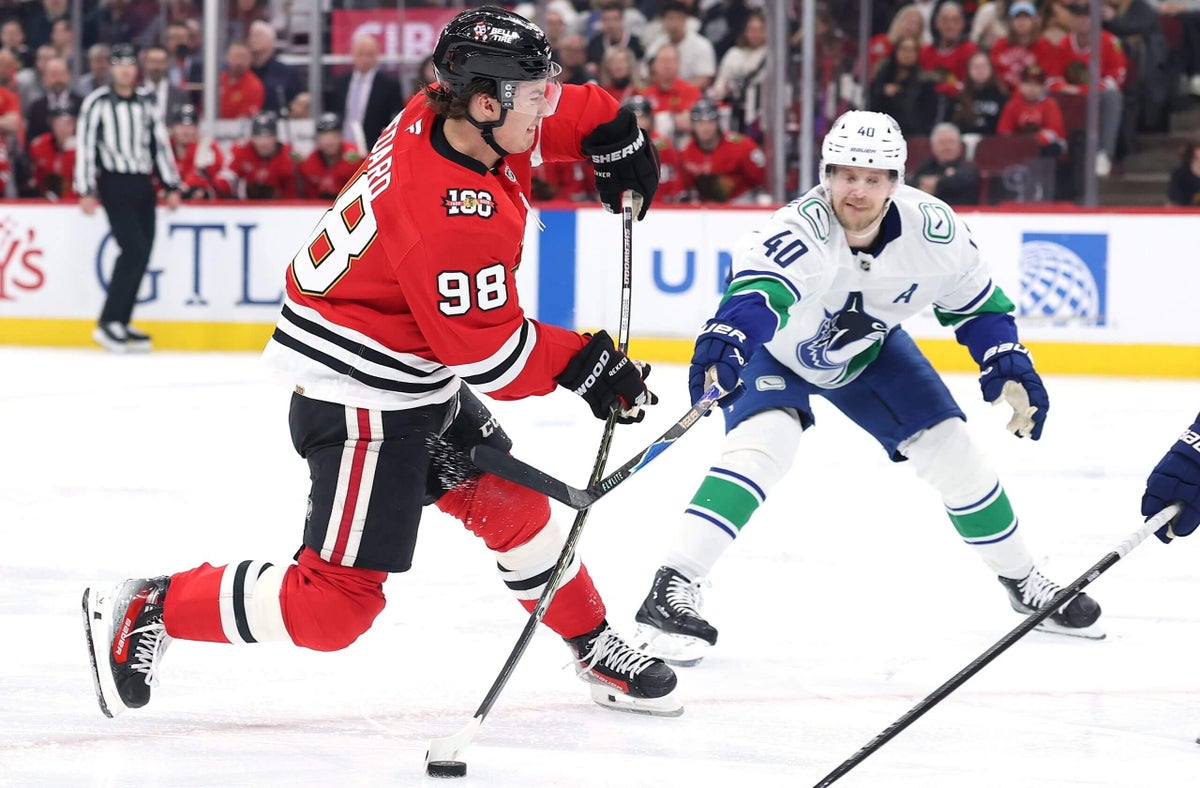
Chicago has notably yet to get star centre and North Vancouver native Connor Bedard to sign his second contract. In Bedard’s three seasons on his entry-level deal, the Blackhawks have finished no higher in the standings than 31st.
Chicago isn’t just on the clock where Bedard is concerned; that clock has arguably already struck midnight, given how long it’s taken for Chicago to take the substantive steps forward that any successful rebuilding team should.
No matter what Bedard or Blackhawks management say in public about contract negotiations, there can be no mistaking the scream of desperation emanating from the Byram acquisition.
Byram is a very good player. I genuinely thought he performed at the level of a legitimate top-pair defender in the second half of this season in Buffalo. It should be prominently noted, too, that the Blackhawks’ gross overpay would never occur if there weren’t other bidders at the auction.
Sending the No. 4 pick to the Sabres, in addition to No. 45, a useful, physical penalty killing specialist in Louis Crevier and also agreeing to eat the onerous final year of Buffalo’s Jordan Greenway commitment, however, is a deal that’s impossible to understand from Chicago’s side of the ledger unless you price in that the Blackhawks feel internal pressure to improve rapidly.
And it seems obvious that this pressure stems from an ultra-competitive young star player who has yet to commit long-term and is understandably dissatisfied with the franchise’s hapless direction to this point in his career.
What Chicago is enduring, what’s now effectively baked in for the Blackhawks, is like a flare in the sky providing the newly rebuilding Canucks a signal about where they should be trying to land.
Not only is it a reminder that while patience is a virtue in a rebuild, when you get lucky enough to land that Bedard-type franchise-level talent at the apex of the draft, that’s also when the real urgency must kick in.
Players like Bedard don’t tolerate losing indefinitely. They don’t tolerate inept coaching and management.
You may need to sink to the bottom of the standings to land the best young talents in the sport, but you won’t retain them for long if you don’t engineer a hasty way to pull out of the skid.
This isn’t just about Bedard, either. And it certainly isn’t about the anxiety-ridden bellyaching among Canadian hockey fans about the advantages that accrue to teams in no-state tax jurisdictions.
There’s a golden era of Lower Mainland-born-and-raised talent washing across the NHL at the moment, with the likes of Bedard, Macklin Celebrini, Zach Benson, Kent Johnson and a whole host of other promising players who are tracking toward unrestricted free agency — and thus an increasingly greater degree of control over where they sign and who they play for — over the next four to five years. And there’s more high-end B.C.-born talent coming, including in this draft class.
That right there should crystallize Vancouver’s rebuilding timeline. Four to five years might not be enough time to contend outright by building through the draft. If general manager Ryan Johnson and co-presidents Henrik and Daniel Sedin can build up the requisite base of young talent quickly enough, while the organization constructs a state-of-the-art practice facility, then there’s a meaningful path to being the sort of destination franchise that, clearly, every NHL team is going to need to aspire to be in a climate where player power rules the day.
At the very least, the Canucks should read the leaguewide tea leaves and emerge from this run of trade action with a clearer understanding of the primary mission going forward.
The question for this rebuild, as Tuesday’s trade activity underlined, shouldn’t be “when will Vancouver make the playoffs again?” It should be “how do the Canucks become a destination franchise again?” For, at the very least, the conveyor belt of elite NHL talent that grew up here and dreamed about being part of the Vancouver team that might finally deliver the Stanley Cup to the city with the public park similarly named for the 16th Earl of Derby.
In contrast to the sputtering of the Blackhawks, a very different and urgent situation for the Canucks continued to come into focus from within the Pacific Division.
The San Jose Sharks are quickly rising, as this is a team that, through both ingenuity and good fortune, is accumulating talent at a dizzying, intimidating clip.
William Eklund is an excellent two-way forward and will be a real loss for San Jose. But what the trade that sent Eklund to Ottawa for the No. 9 pick signals is a serious problem for Vancouver. And for the rest of the division.
In the wake of that trade, Sharks general manager Mike Grier is now positioned to make his eighth, ninth and 10th first-round draft selections in the five years since he took over as San Jose’s head of hockey operations.
Instead of worrying about positional need with the No. 2 pick, the Eklund trade signals convincingly that Grier intends to take the superstar-level wing talent that the Sharks have lucked into by winning the second draft lottery draw in early May.
Ivar Stenberg is now overwhelmingly favoured to be selected by San Jose on Friday. Meanwhile, Grier has also engineered a path to nab one of the top defenders in this rich blue-line class, most probably Daxon Rudolph, if the board unfolds as widely expected, by acquiring the ninth pick.
With Celebrini, the best young forward in a generation in tow, the Sharks have accumulated — and are continuing to accumulate — a volume of talent that’s going to be nigh impossible for the Canucks to match over a reasonable time frame.
Even as the Vegas Golden Knights age out and the Oilers fade, the Sharks are undeniably perched to be an intractable problem for Vancouver in the Pacific over the course of the next decade (or more). Especially if Rudolph, or Alberts Šmits, or Keaton Verhoeff, or whichever defender who falls to San Jose with the ninth selection is as good as I think they are.
If the time for the Canucks to be bold wasn’t necessarily in the early part of this week, as the trade market hit this mind-bending fever pitch, then make no mistake, that moment is quickly approaching.
As the Blackhawks’ overpay clarified Vancouver’s timeline on multiple fronts and served as a reminder that patience only goes so far in successfully rebuilding, the continued creativity and ascendance of the Sharks served as a bright shining indication of how much talent is required to break through. And of how efficiently and boldly that talent must be acquired to keep pace in the great efficiency contest that is the NHL.
At some point soon, the Canucks are going to need to make the difficult decisions this rebuilding process requires. At some point soon, Johnson and company are going to have to swing the bat.
