The 2026 NBA Draft is next week. The top four picks belong to the Washington Wizards, Utah Jazz, Memphis Grizzlies and Chicago Bulls. There’s been a strong sentiment since the lottery that the top four picks will be some combination of BYU wing AJ Dybantsa, Kansas guard Darryn Peterson, Duke forward Cameron Boozer and North Carolina forward Caleb Wilson.
Then there’s the LA Clippers at No. 5, via the gift that the Indiana Pacers supplied as part of February’s Ivica Zubac trade. By all accounts, this draft really starts when the Clippers get on the clock.
Before we get into what could happen at No. 5, let’s set the table with the Clippers roster:
LA Clippers pre-draft roster
| Clippers pre-draft | Point guard | Shooting guard | Small forward | Power forward | Center |
|---|---|---|---|---|---|
|
Starters |
Darius Garland |
Kris Dunn |
Kawhi Leonard |
John Collins |
Brook Lopez |
|
Rotation |
Kobe Sanders |
Bennedict Mathurin |
Jordan Miller |
Derrick Jones Jr. |
Isaiah Jackson |
|
Backups |
Bogdan Bogdanovic |
Cam Christie |
Nicolas Batum |
||
|
Two-way |
Sean Pedulla |
TyTy Washington Jr. |
Norchad Omier |
||
|
Injured |
Bradley Beal |
Yanic Konan Niederhauser |
All-Star small forward Kawhi Leonard turns 35 at the end of the month, is extension-eligible and is entering the final year of his current contract. Point guard Darius Garland, acquired midseason in exchange for James Harden, is extension-eligible and has two years remaining on his current contract. Just about everything else is up in the air.
Defenders Kris Dunn and Derrick Jones Jr. are both extension-eligible as well, with Dunn’s contract for next season becoming guaranteed at the end of the month. Starting power forward John Collins was extension-eligible but will likely head into unrestricted free agency. Shooting guard Bennedict Mathurin is headed towards restricted free agency. The Clippers hold team options on starting center Brook Lopez, backup power forward Nicolas Batum, backup shooting guard Bogdan Bogdanovic, 2025 second-round pick Kobe Sanders and 2023 second-round pick Jordan Miller. Injured shooting guard Bradley Beal has a player option that he is likely to exercise. Cam Christie’s contract isn’t guaranteed until June 30, and the draft may determine whether he retains that spot. Backup center Isaiah Jackson is under contract for two more seasons, while 2025 first-round center Yanic Konan Niederhäuser will spend his entire offseason recovering from Lisfranc surgery. Sean Pedulla is the lone two-way contract signed for next year.
This Clippers team could use help at every position. No, really:
• Point guard: The lack of ballhandling depth, especially after Chris Paul fell out of favor, put the team at a disadvantage all year.
• Shooting guard: The Clippers don’t have accuracy problems, but they have a lack of volume shooters annually.
• Small forward: Plenty of viable options, but their best player is in his mid-30s.
• Power forward: The Clippers were a bottom-10 rebounding team, and that was with Collins.
• Center: The trade of Zubac, the age of Lopez, the size of Jackson, and the injury to Konan Niederhäuser leave the Clippers without a legitimate starter.
It would have been nice for the Clippers to have a top-four pick in this draft. Dybantsa could have been their next star wing. Peterson would have fit seamlessly into a starting spot next to Garland. Boozer averaged 22.5 points and 10.2 rebounds, while Wilson averaged 19.8 points and 9.8 rebounds; both ACC freshmen would have been starters up front for the Clippers.
But it’s not like the Clippers were seeking a top-four pick. The protections on Indiana’s pick was from 1-to-4 and 10-to-30. LA is at the top of the range it was satisfied being in.
The Clippers now have three realistic paths: stay at No. 5 and draft a player, trade down and accumulate assets, or use the pick as part of a larger move. The most-likely outcome remains the simplest one.
Stay at No. 5
Just because the Clippers like the options at No. 5 doesn’t mean I have to agree or be as excited about it. The best players available in the 5-10 range, especially when you look at The Athletic’s Sam Vecenie’s draft guide, are guards. The Clippers happen to have a small guard who they consider a franchise player. Garland, the No. 5 pick in 2019, is champing at the bit to have the keys to an offense after sharing the ball with small guards Collin Sexton and Donovan Mitchell in Cleveland.
No. 5 is a tricky spot — Dunn was also selected there 10 years ago, and it took him a while to understand what kind of player he needed to be to stick. Garland is the last player selected fifth to be named an All-Star; the only other All-Stars selected fifth in the last 15 years were also small guards: De’Aaron Fox (2017) and Trae Young (2018).
Darius Acuff is the most polished point guard in the 2026 NBA Draft
Sam Vecenie
Darius Acuff Jr.
- Who he is: Arkansas point guard, consensus All-American.
- Why it could work: Led SEC in scoring (23.5 points, 6.1 free-throw attempts) and assists (6.4, 2.2 turnovers) per game. Made 2.5 3s per game (44 percent), was the fastest player at the combine and has good length (6-foot-7 wingspan). Decent explosiveness. You all saw what Jalen Brunson did. Passing on Acuff would be difficult because of what he could do individually.
- Why I’m concerned: How many small guards named Darius do you need?! Garland is 6-1, 192 pounds. Acuff is 6-2, 186 pounds. The Clippers saw how opposing offenses hunted Garland for buckets this spring, and Acuff is likely even more of a liability defensively. Acuff will need the ball in his hands. The fit with Garland is rough, so if you’re taking him, what does that say about Garland’s future?
Keaton Wagler
- Who he is: Illinois point guard, consensus All-American.
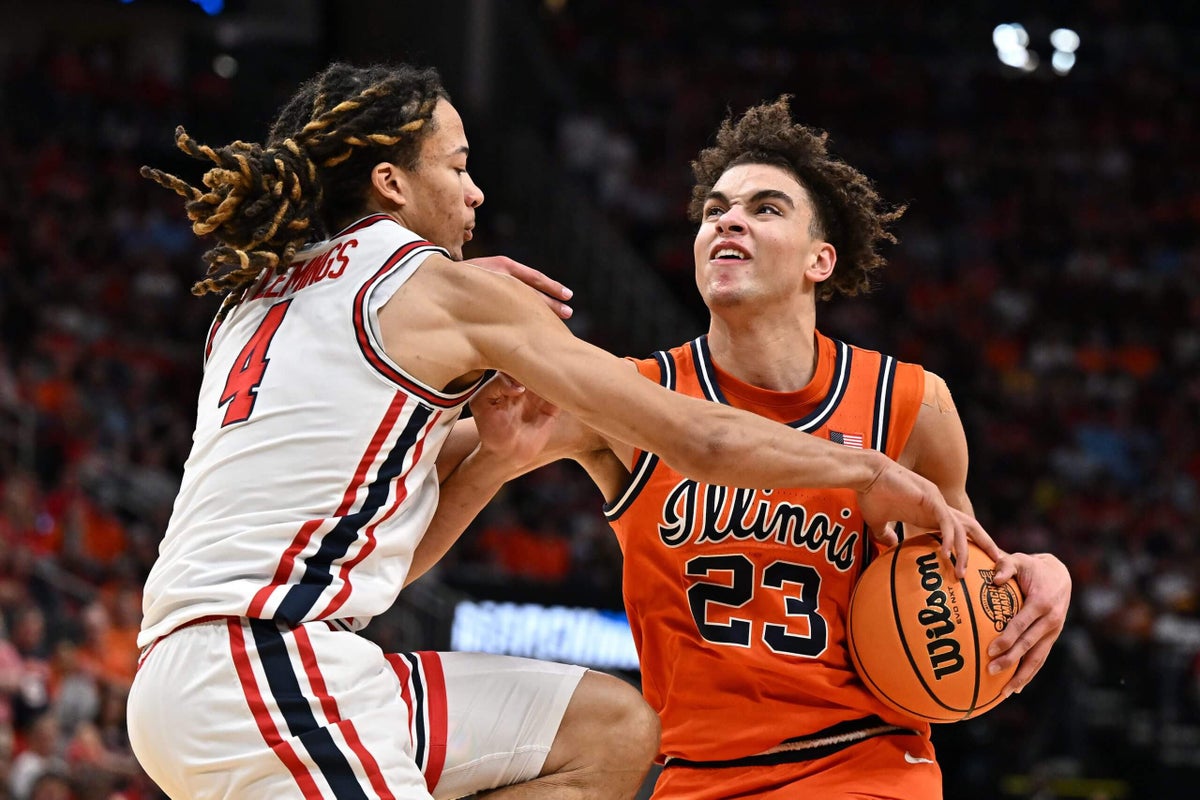
- Why it could work: This front office picked Shai Gilgeous-Alexander in 2018. Gilgeous-Alexander checked in at 6-5, 180 pounds at the 2018 combine. Wagler came in at 6-5, 188 pounds in May. Gilgeous-Alexander averaged 14.4 points (4.7 free-throw attempts), 4.1 rebounds, 5.1 assists, and 1.6 steals in his one year at Kentucky. Wagler averaged 17.9 points (5.8 free-throw attempts), 5.1 rebounds, 4.2 assists (1.8 turnovers) and 2.4 3s (39.7 percent) in his one year at Illinois. From a fit perspective, Wagler at least has more height and positional versatility than Acuff. The Clippers place a premium on skill, and Wagler has a comfort to his game that suggests he will get to his spots quickly. Gilgeous-Alexander had the midrange; Wagler is more comfortable with the 3. Clippers have drafted out of the Big Ten three times in the last four years.
- Why I’m concerned: I prefer explosive guards, and Wagler is a walk-it-up, skinny guard with shorter arms than Acuff (6-6 wingspan) who doesn’t dunk. Not going to be an asset defensively, and doesn’t get many steals either. High-floor option, but the athletic threshold is unsettling.
Mikel Brown Jr.
- Who he is: Louisville point guard, All-ACC.
- Why it could work: The explosiveness to go with the positional size at 6-4, 190 pounds, and 6-8 wingspan. Some of the quickest feet in the draft and nearly a 40-inch vertical leap. Averaged 5.8 free-throw attempts, 4.7 assists, 1.2 steals, and 2.6 3s. Made 84.4 percent from the line. Worked out for the Clippers this month.
- Why I’m concerned: Prohibitive efficiency. Made only 41 percent from the field, 34.4 percent from 3 and averaged 3.1 turnovers per game. Only one offensive rebound all season. Will be a defensive liability. Missed a lot of time with a back injury last season. Maybe a higher ceiling than Wagler, but certainly a lower floor due to the lack of strength, durability and inconsistent decision-making.
Kingston Flemings
- Who he is: Houston shooting guard, consensus All-American.
- Why it could work: I list Flemings as a shooting guard, but only because he played with a more pass-first guard in Milos Uzan; Flemings has positional versatility on both ends. Averaged 4.1 rebounds, 5.2 assists (1.8 turnovers), 1.5 steals, 1.1 3s (38.7 percent). Cleared 40 on the vertical leap at the combine. Will actually defend.
- Why I’m concerned: Flemings is the best defender of the small guards, but he is small at 6-3 with short arms (6-4 wingspan) and weighs only 183 pounds. The least threatening scorer of the guards as well, averaging only 3.5 free-throw attempts per game.
Brayden Burries
- Who he is: Arizona shooting guard, All-Big 12.
- Why it could work: A Bradley Beal-sized guard coming out of one of the very best teams in America. He’s 6-4, 215 pounds. Outstanding feet to slide defensively. One of the best standing verticals at the combine (35 inches), and I value explosiveness. Averaged 4.9 rebounds, 1.5 steals, and 1.8 3s per game. Made 39.1 percent from 3 and 80.5 percent from the free-throw line. From Southern California. Cleanest fit next to Garland from a positional standpoint. Worked out for the Clippers this month.
- Why I’m concerned: I am not sure if Burries is the type of player who will be an offensive star. Averaged only 2.4 assists per game despite being Arizona’s top offensive option. Short arms as well (6-6 wingspan). Solid floor, but questions about the ceiling here.
Yaxel Lendeborg
- Who he is: Michigan small forward, consensus All-American.
- Why it could work: I’m throwing Landeborg here because he’s the best of the non-guards once the Clippers are on the clock. Played small forward at 6-9, 241 pounds on a championship team. Massive 7-3 wingspan. Certainly has the size of an NBA big. Skilled: 15.1 points on 51.5 percent field goals, 3.2 assists (1.1 turnovers), 1.7 3s (37.2 percent). Makes his free throws, rebounds, active defensively on a strong defensive team. Good enough feet.
- Why I’m concerned: It’s unlikely that Lendeborg will come into the league and dominate offensively, or ever be a top scorer. Unimpressive leaper. Turns 24 in September. Not that age has stopped the Clippers before on draft day.
There are other players the Clippers could consider, but then you’re getting into reach categories or trading down to the point of losing the value that you acquired in trading for this pick. If the Clippers aren’t certain that any of those players are worth selecting at No. 5, they have another option.
Trade down
Does trading down to the 6-to-9 range make sense? Perhaps in a vacuum it does. The Clippers should want to continue replenishing assets, and a trade down theoretically would help them do that while still drafting a player they’d be satisfied with. The teams currently occupying 6-9 are the Brooklyn Nets, Sacramento Kings, Atlanta Hawks and Dallas Mavericks.
But this isn’t a vacuum. This draft has the kind of depth of talent that behooves a team in this range to keep their assets and get the one who falls to them. Does it make sense for Dallas to give up two first-round picks just to have the same dilemma as the Clippers? Does it make sense for Brooklyn to give up a first-round pick that could be a top-four selection just to move up a spot for a player who isn’t significantly better than other options? Do the Clippers want to do business with a Kings team that is in their division? After the approval of the new draft lottery system, would the Clippers be all that eager to risk acquiring picks?
Use the pick in a blockbuster
Then there’s the question of whether the Clippers could trade out of the draft and use their assets to land a star talent. Maybe if this were 2023, the last time Leonard had a year left on his deal and LA acquired Harden that fall. But Clippers basketball president Lawrence Frank made it rather clear that this is a new era of team building.
The Clippers will remain “opportunistic,” he has said, but they’re also content with a more “sustainable” build from being competitive to being contenders. That means less of an appetite for star players who are 30 and over and due the kind of contract extensions that eliminate the Clippers’ goals of operating under potentially impactful cap space.
The Aspiration wild card
One factor hanging over all of these scenarios is the league’s ongoing Aspiration investigation. NBA commissioner Adam Silver indicated before Game 1 of the NBA Finals that the league wants resolution sooner rather than later.
“I think we are close to the point now where I think we need to wrap this up, because you also need finality,” he said. “The team has to understand what situation they are going to be operating under, and so do the other 29 teams. So that’s where things currently stand.”
That statement suggests that whatever consequences the Clippers are levied, they need to be applied sooner rather than later. The Clippers are in business with other teams. The draft is a part of that. It seems more likely that the league investigation on Aspiration would conclude after the draft, and it sounds like Silver would not mind having a verdict in place before free agency the following week. If LA is going to be stripped of picks, why would it take itself out of a pick it controls to move down to acquire future picks it could lose?
But first, let’s have a draft next week. The fallout of LA’s decisions can be assessed further after that.
